Most campers think they can get by with a torch and a rusty stove – until the batteries die, the heater gives up, and your phone’s flat before breakfast. I’ve been there. Freezing in a tent with no light and a half-boiled kettle is no badge of honour – it’s just miserable.
That’s where the Jackery 2000 Plus comes in. It’s not just another shiny box with a plug. This thing promises serious off-grid power for proper campers, vanlifers, and anyone who hates running out of juice. But does it live up to the hype in real-world British weather? Let’s find out.
What on Earth is the Jackery 2000 Plus?
The Jackery 2000 Plus is a heavy-duty portable power station. In plain speak: it’s a giant battery with plugs and ports for almost anything you use electricity for. It holds enough juice for fridges, power tools, laptops, lights, and more.
The 2000 Plus isn’t for the backpacker trying to go ultralight; it’s for folks who camp with family, use campervans, or want a serious home backup in a storm. If you’ve ever tried to run a cool box or heated blanket all night on a basic battery pack, you’ll know what pain truly is. This Jackery promises to do much more.
Jackery 2000 Plus: Key Features
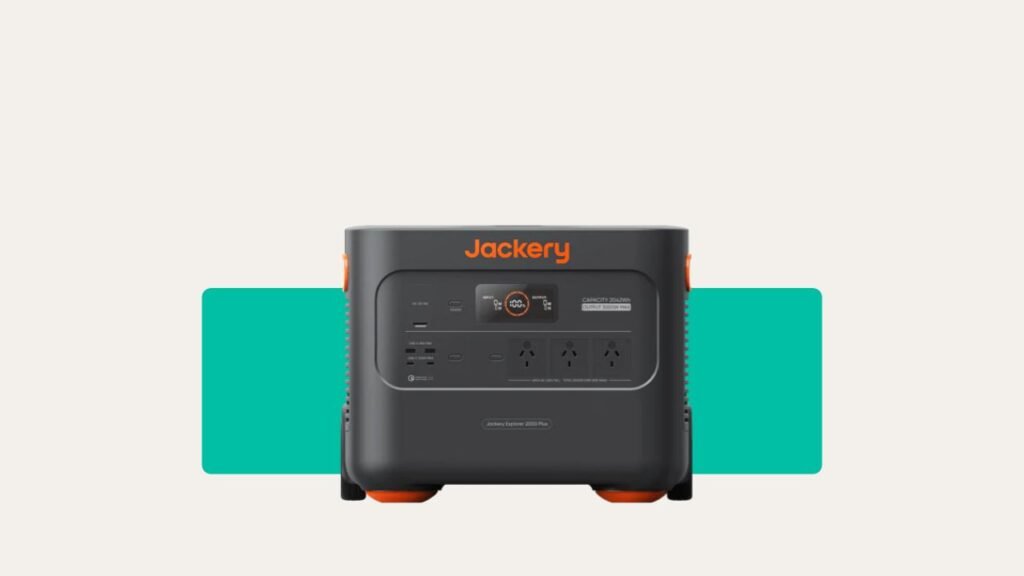
Here’s what you get under the orange shell:
- Base Capacity: 2,000Wh (that’s kilowatt-hours, enough to run a fridge, portable heater, or lights for several hours)
- Peak Output: 3,000W (so it’ll start kettle, grill, or power tools without flinching)
- Expandable: Up to 12,256Wh with extra batteries – think home backup for a full day, not just camping
- Ports: 3 x AC mains sockets, USB-A and USB-C, 12V “cigarette lighter”, RV output, and more
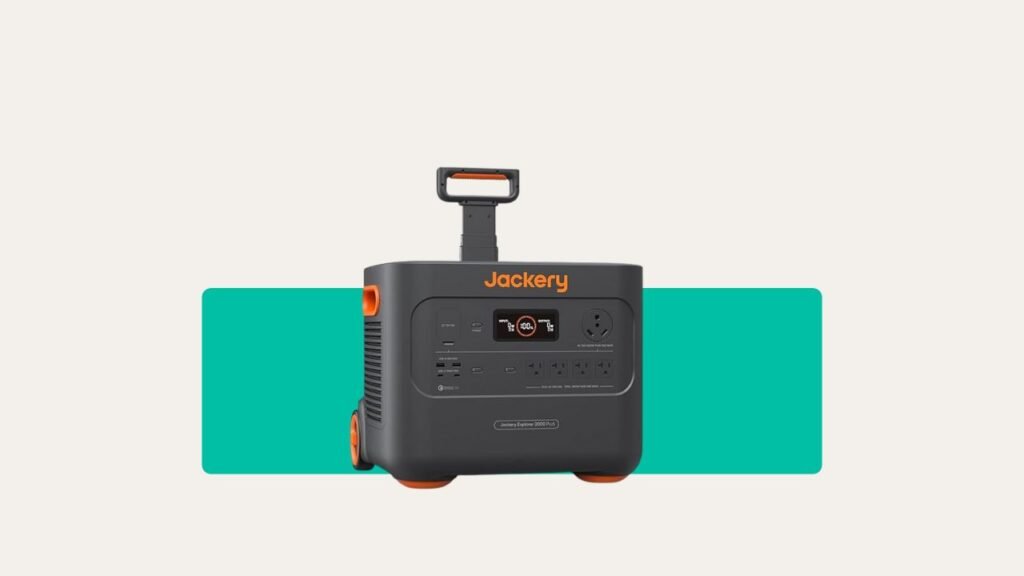
- Wheels & Telescopic Handle: It’s heavy, but you can pull it like a suitcase
- Solar Ready: Attach panels and recharge free from the sun
- Battery Chemistry: Uses LiFePO4, which means a much longer lifespan and less risk of damage if totally drained
Forget tech jargon: What this means is you can run real gear, for real hours, without worrying you’ll be plunged into darkness when the wind picks up or the grid goes off.
First Impressions
When you unbox the Jackery 2000 Plus, you’ll feel the heft straight away. It weighs 28kg, so don’t expect to toss it around casually. Yet, once you see the wheels and sturdy trolley handle, you realise it’s closer to ‘posh luggage’ than ‘awkward generator’.
Pulling it through gravel at a Dartmoor campsite, I didn’t feel like I was dragging an anchor. The build’s solid – shock and fire resistant, with no flex on the casing. This unit can survive bumps, rain splashes, and life at camp. I wouldn’t drop it off a cliff, but it’ll outlast cheap rivals in any wet field.
Output: How Much Can the Jackery 2000 Plus Actually Run?
Here’s what matters most: real-world power.
I ran a small fridge (draws about 60W), a couple of LED lanterns, plus charged my laptop and phones for a rainy weekend with the family. The Jackery handled it with ease — didn’t even break a sweat. Running wattage rarely topped 200, and after two days, I still had charge to spare.
In emergencies, you could add heavier loads (like a travel kettle at 1800W or a small heater), and it’ll manage kettles, power tools, or a microwave for quick bursts.
It’s not just for camp, either: during a blackout at home, it kept the broadband router, a lamp, and the freezer alive well into the next day. That peace of mind is priceless if you live in the sticks.
Modularity & Expandability
Most power stations are fixed capacity – once they’re empty, you’re on your own. The 2000 Plus lets you add up to five extra batteries, turning it into a mammoth 12,000+Wh setup. Is that over the top for most weekends? Absolutely. But if you’re running an event, glamping, using it as a home UPS, or on a long off-grid tour, this expandability is a proper game-changer.
If you only ever camp three nights with LED lights and the odd phone charge, it’s probably overkill. But for group camps, or if you need backup at home, that option is unmatched.
Charging Capabilities
Mains charging is quick. Off a normal wall socket, I’ve recharged it from empty in just about 2 hours. The solar route needs patience – and sunshine, which, honestly, is hit or miss in British weather. With good sunlight and three or four decent panels (think 800-1200W input), it can top up fully in a day.
I rigged three folding panels along a Cornish stone wall, and it gulped sun eagerly until the clouds rolled in. Don’t bother with in-car charging unless on a long, long drive – it’s slow and best saved for topping up. You can run gear and charge simultaneously – handy if you’re topping up the battery while boiling a kettle at breakfast.
Ease of Use and the Display
Jackery knows campers don’t want fiddly buttons or software. The front display is clear and direct: battery percentage, input/output watts, and usage time. The main power and outlet buttons are glove-friendly, even with numb fingers on a cold October night, I could work it. Ports are lined up for easy access, and the light-up display doesn’t blind you after dark.
The smartphone app sounds a bit gimmicky, but it’s handy for checking status from inside your tent or van, especially in rotten weather.
What’s Brilliant about the Jackery 2000 Plus?
- High power output – runs proper gear, not just gadgets
- Expandable battery for serious backup or remote camps
- Charges fast, and solar input actually works – if you get the sun
- Tough, weather resistant, and built for hard use in Britain
- Clear display, intuitive controls, and a decent companion app
- Wheels and trolley handle mean moving it isn’t a back-breaker
- This isn’t a toy or a ‘suggested by influencers’ gadget – it’s a serious bit of kit.
What’s the Catch? Where Does Jackery 2000 Plus Miss the Mark?
- It’s heavy – no getting around that, unless you’re happy with much less capacity
- Pricey up front, with expansions costing even more
- A bit stingy on port numbers; other brands fit more sockets in the same space
- Solar charging is weather-dependent, and panels cost extra
- If you only need 1-2 nights' power for light camping, it’s too much hassle and bulk
How Does the Jackery 2000 Plus Compare to Rivals?
I’ve tried Bluetti’s AC200Max and Goal Zero’s Yeti 1500X. Both are decent units. The Bluetti gives you double AC sockets, but charges more slowly and feels plasticky. Goal Zero’s interface is pretty but fiddly, and neither moves as easily over rough ground as the Jackery. The Jackery 2000 Pro is sleeker and lighter if you camp light, but it doesn't expand and won’t last as many cycles.
If you want more capacity or more ports for the money, some Chinese brands appeal – but their build quality and support can be patchy. Jackery’s UK warranty (five years if you buy direct) and service is worth paying for.
Who Should Actually Buy This?
If you’re a festival group, family camper, off-grid van lifer, or want a dependable home backup, this is gold. It makes ordinary weekends feel plush, but more importantly, it’s insurance for autumn storms and failed grid.
If you’re solo wild camping, hiking, or on a tight budget, you don’t need this beast. Try something half the weight/capacity instead.
The Verdict: Worth It for Proper Campers and Backup Power
There’s no faff or false promises here. The Jackery 2000 Plus does exactly what it says on the tin, and more. If you need serious, expandable, reliable power – and don’t want to gamble with untested brands – this justifies its price. For the UK, where the weather is unpredictable, blackouts are real, and you can’t always light a fire, I’d trust this Jackery every time.
Best thing? I no longer wake up to dead phones or fridge food turning to mush. If you need a power station that can do it all – from boiling kettles at dawn on Dartmoor to keeping the freezer humming in a power cut – this is the one to beat.
FAQs
How long does the Jackery 2000 Plus last on a charge?
Depends on what you’re running. A fridge and lights might last 24-48 hours. Charging phones? Weeks! Big heaters and kettles chew through it faster.
Is it really portable for camping?
At 28kg, only just. Fine for car, van, or trailer camping, but not for lugging across a field on foot. The wheels and handle help, though.
Can it power a fridge or power tools?
Absolutely. Up to 3000W peak, so it’ll handle heavy stuff – fridges, kettles, even microwaves (short bursts).
What’s the lifespan like?
The LiFePO4 battery will last thousands of charge cycles. Used daily, expect ten years or more before fading.
Can I use solar to charge it in the UK?
Yes, but only plan for solar if you have decent panels and a bit of sunshine – best as a supplement, not your only plan.
Is the app worth it?
It’s not essential, but it’s handy on wild, rainy nights when you don’t fancy leaving the tent.