Most people think you need a massive generator to stay powered up outdoors. You don’t. The Jackery Explorer 500 proves that lightweight and capable can go hand in hand – if you know its limits. I’ve seen this unit show up at campsites from Cornwall to the Cairngorms, powering everything from fairy lights to fridges (and yes, left out in one too many downpours).
In this review, I’ll walk you through how it really performs off-grid, what it’s good for, where it struggles, and whether it’s the power station you’ll be glad you packed – or wish you left in the garage.
Quick Look at the Jackery Explorer 500
The Jackery 500 is basically a high-capacity, lithium battery in a durable plastic box – about the size of a fat rugby ball. Most newer campers ask whether it’s worth the investment, and it sits bang in the middle ground. Not as wild as a full-blown generator, but proper compared to little phone chargers.
Who’s it for? Anyone serious about weekends off-grid – wild camping, road trips, camper vans, even prepping for a blackout. If you’re tired of rationing phone power or can’t stand a cold torch on day two, this is a genuine upgrade.
The Design – Size, Weight, and Handling
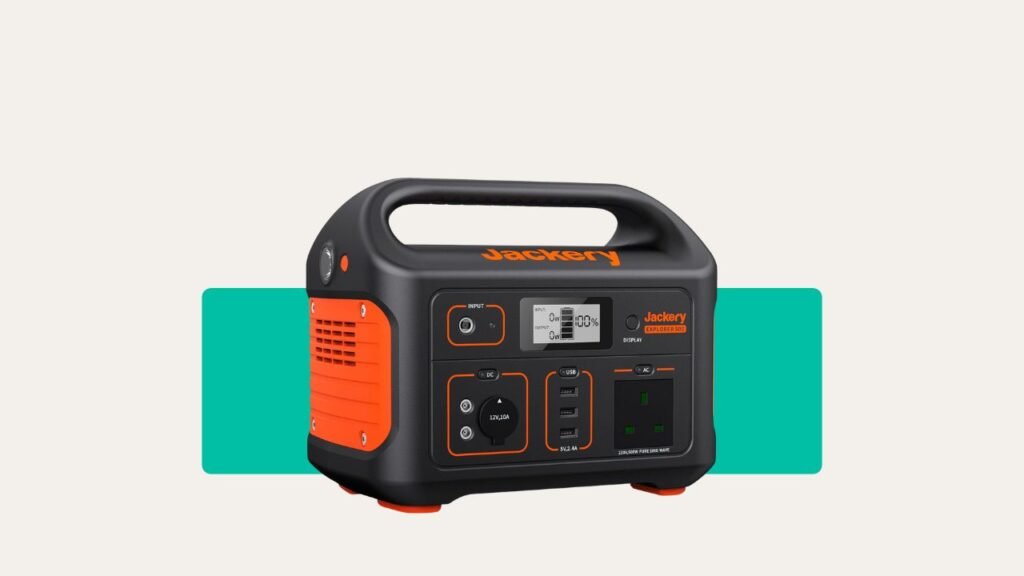
You’ll spot the Jackery 500 at most club meets — black body, bright orange handle, with simple chunky buttons on the front. No faff, and you can tell it was built for actual use, not to look nice on an Instagram post.
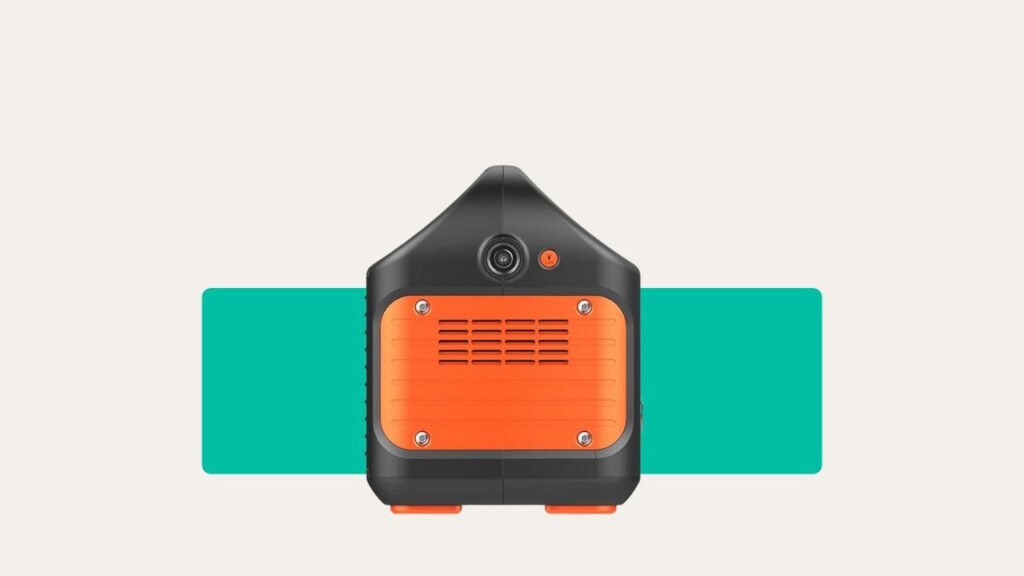
I’ve lugged one from the car park to pitch across wet grass, and while six kilos (about 13 lbs) won’t break you, it’s not one for backpacking. But it’ll squeeze in the boot alongside your gear easily. The carry handle is sturdy, proper size for gloved hands, and the whole unit feels reassuringly solid.
Just be aware: drop it in a stream and you’ll regret it. It’s not waterproof. Use your dry bag principle – just as you’d never trust a non-waterproof tent in the Lake District in October, don’t leave the Jackery out in a downpour.
Power and Output Options
Now, this is where most campers get confused. What does 500W actually give you? The Jackery Explorer 500 packs a 518Wh battery, which is your tank. Power outlets are:
- One AC socket (three-pin, up to 500 watts continuous, 1000W surge)
- Three USB-A ports (standard, not fast charging)
- One 12V car port and two odd-sized DC outputs
So, in plain English, it’ll run your laptop, charge up drones, keep phones topped up, handle fairy lights, fans, or a mini coolbox. But forget things like kettles, hairdryers, or anything chunky. Try it and you’ll trip the safety. I learnt the hard way when a mate plugged in a travel kettle one windswept morning near Ullswater; it instantly cut out.
Still, for campsite tech or keeping your essentials running, it’s spot on.
Battery Life on Camp and Real-World Performance
This is what everyone wants to know: how long will it last? If you’re just topping up phones and running a couple of LED lanterns at night, you’ll get multiple days without stress. I’ve managed four full days charging two smartphones, a DSLR, a GoPro, and running a 20W string of camp lights for three or four hours every evening. Never dipped below 40%.
Need more specifics? You’ll get:
- Typical smartphone: 40+ full charges
- Laptop (45-65W): Four to six charges
- LED lantern (10W): 30-40 hours
- Small cool box (40W): About 10 hours
Just know – cold weather saps battery life. One grim weekend in Northumberland, temps dropped below freezing, and I lost about 20% capacity compared to a mild spring trip. If you’re winter wild camping, adjust expectations.
Charging the Jackery 500
- On the road, charging options are as flexible as you’d expect:
- Standard plug at home (about 7-8 hours)
- 12V car socket (a bit slower, 10-12 hours – engine running)
- Solar (Jackery SolarSaga 100 is the official partner)
Here’s the rub – charging by solar is only as good as the British weather. One sunny day in Dorset gave me a full charge in 9-10 hours. Cloudy Wales? You’ll need patience or a backup plan. So, consider topping up every time you have mains access, just like topping up your water before heading out.
Matching Jackery 500 with SolarSaga Panels
The Jackery SolarSaga 100 panel pairs well, but only if the sun’s on your side. Setup is fast – prop the panel outside your tent or van, plug it in, and you’ll see the battery ticking up. Direct sun? Expect a solid 55-65W coming in (so full charge in about nine hours). Cloudy or low winter light? You’ll be lucky to see 10W.
The panel packs down slim, is lighter than many rivals, and includes USB charging ports for direct phone trickle if you’re desperate. Just remember to peg or weigh it down in the wind – more than once I’ve had to chase it across a blustery field.
What Sets Jackery 500 Apart from Competitors
You see lots of talk about EcoFlow, Bluetti and others, and each has its fans. For my money, Jackery stands out for reliability. I’ve never had a Jackery randomly shut down or give weird error codes, unlike a mate’s EcoFlow, which had a mind of its own midway through a stormy Cornish night.
The Jackery’s build is rugged. The user interface is simple – even after a wet, muddy walk, I can turn it on or see battery level with numb fingers. And although it’s not the cheapest, you’re paying for confidence. When the wind howls and the rain lashes, you want gear that just works.
Drawbacks and Things to Watch Out For
Let’s not pretend it’s perfect. First, it’s not waterproof. Forgetful types (like me) need to toss a bin bag over it if rain’s on the way.
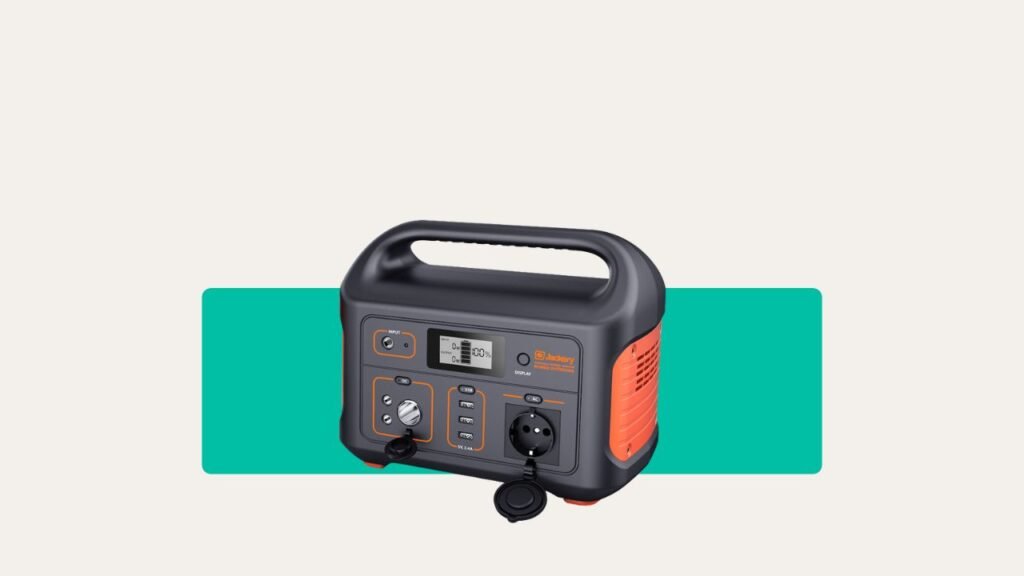
Only one AC output. On a group camp, you’ll want an extension if anyone else wants mains power. There’s no USB-C or wireless charging, so if your gadgets need those, bring adapters.
It’s a bit heavy for hiking camps. Six kilos won’t faze you if you’re parking nearby, but you won’t want to drag it up Helvellyn.
Can’t handle heavy-draw gadgets – no travel kettles or heaters.
Finally, it’s not for everyone. Some mates laugh at the idea of lugging any power to wild camp, but a few cold, dark evenings and flat phones tend to change minds.
Verdict – Who the Jackery 500 Fits Best
If you’re car camping, van living, or want solid backup at home, the Jackery Explorer 500 is a solid buy. It’s a no-nonsense workhorse: plenty of juice for typical gadgets, sturdy design, and near idiot-proof operation.
For backpackers and wild campers trekking miles, it’s too heavy. Anyone needing to run high-draw appliances, look higher in the range, or accept you’ll need gas and patience.
But for most UK campers who want hassle-free power – rain, midges, muddy boots and all – it makes life outdoors easier. I’ve learned that nothing spoils a camp faster than flat devices, dead torches, or borrowed cables. The Jackery 500 sorts that, and once you’ve tried it, you wonder how you ever managed with battery banks alone.
Planning a trip? My advice: charge it full, bring an extension lead, and, for the love of waterproofs, keep it dry!
Is it worth the money? For the kind of camper who likes to have lights, phones, cameras, and maybe a bit of music every evening, absolutely. Just don’t expect it to make a cuppa in the morning: that’s still down to your trusty gas stove.