Most campers know the drill – arrive at your pitch, skies threatening rain, and then spend the next 40 minutes wrestling poles while your neighbours sip tea smugly in already-pitched setups. I’ve been there, soaked sleeves and all. That’s why inflatable tents like the Quechua Air series caught my eye. Pump it up, peg it down, job done (supposedly).
Quechua says these tents are quick, sturdy, and comfy enough for proper family camping without the setup stress. But can a tent that inflates really hold up to gusty British campsites and the chaos of kids? I took one for a proper field test. Here’s what happened.
Quick Look at Quechua Air Tent Models
Quechua makes a range of inflatable tents under the “Air Seconds” name. The main differences? Number of people, how much room you get, and the little touches you’ll either love or curse.
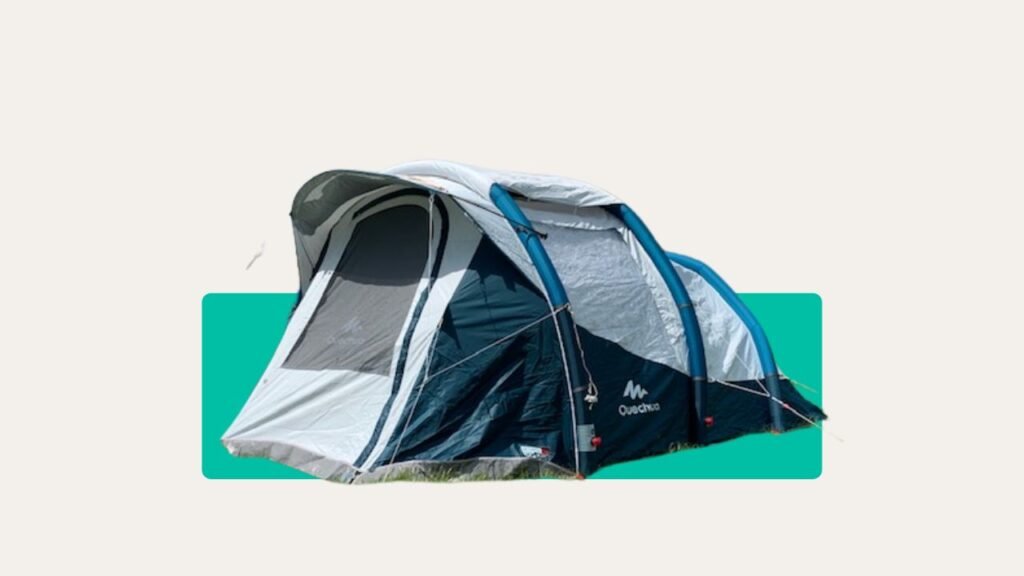
- Air Seconds 4.1 F&B (Fresh & Black): A four-person tunnel tent. Big enough for a couple and some gear.
- Air Seconds 5.2 F&B: More space, two sleeping pods, good for families or mates splitting space.
- Air Seconds 6.3 Polycotton: Big, comfy and a touch posher with “polycotton” that breathes better (and weighs more).
- Air Seconds 8.4: The big daddy of the range. Four bedrooms, central living area, sleeps eight if you’re friendly.
All models offer blackout bedrooms (on F&B versions), weatherproofing, and inflatable air beams instead of wobbly poles.
Setup and Packing Away – How Easy Is It Really?
Forget the nightmares of lost pegs and puzzling over which pole slots where. Here, the air pole system is your friend. Lay the tent flat, find the inflation valves (usually all on one side), plug in the pump and get pumping. You’ll want a double-action pump with a pressure gauge, ideally Quechua’s own. Note: it’s rarely included, so factor this into the budget.
I’ve set up one of these solo in Cornwall, wind whipping sand in my face – still took less than ten minutes. Two people make it even simpler. The tent stands itself up as you fill the beams – surprisingly sturdy, even if it feels weird the first time.
Packing away is dead easy: unscrew the valves and watch the tent deflate in seconds. Folding it into the bag is a two-person job with the 6 or 8-person models. The bag is generous, so you’re not fighting for every last zip.
Inside Space and Comfort
Space makes or breaks a camp. The Quechua air tents are roomy for their “person” rating. For example, the 4.1 gives two adults and a small child loads of space, plus room for kit – a table, a couple of chairs, and still space to move.
One tip: don’t cram the full rating in unless you like the feeling of sleeping at Glastonbury. The 8.4 says “eight people” but you’ll be happier as a family of five or even two couples who want privacy.
Headroom is brilliant. The biggest models top out over two metres, so even tall campers don’t get a cricked neck.
Bedrooms are separated, with blackout (Fresh & Black) rooms genuinely keeping things dark – a lifesaver at dawn.
Fresh & Black: Does It Work?
Here’s the feature every tired parent and festival-goer cares about: Fresh & Black. It’s not just a gimmick. The bedrooms are lined with a blackout fabric that does two things – keeps the light out (handy when the sun rises at 5am) and the heat down.
Last summer, I got a proper lie-in after a late night because the bedroom stayed near-dark. It also never got that weird ‘greenhouse’ feeling you get in normal tents. It won’t turn 28°C midday into a cool cave, but it’s dramatically comfier for sleep.
Ventilation and Air Flow
No one likes waking up to dripping tent walls or overpowering morning stuffiness. The Quechua air tents get air flow right: big vents, mesh panels you can zip, and extra flaps above the doors.
Even on muggy Dorset nights, I’ve woken up comfortable, not clammy. Vent hatches sit low and high, letting you control how much breeze comes through. All mesh is midge-proof, which is vital for UK campsites. In heavy rain, you can keep vents part-open without fear of water running in.
If you’re camping in the Highlands, keep the mesh zipped tight. The Scottish midges can, and will, ruin your mood.
Weather Protection: Can It Stand British Weather?
Pitching on the Welsh coast means putting gear through the wringer. The good news: these tents deal with hammering rain and howling wind better than many poled tents.
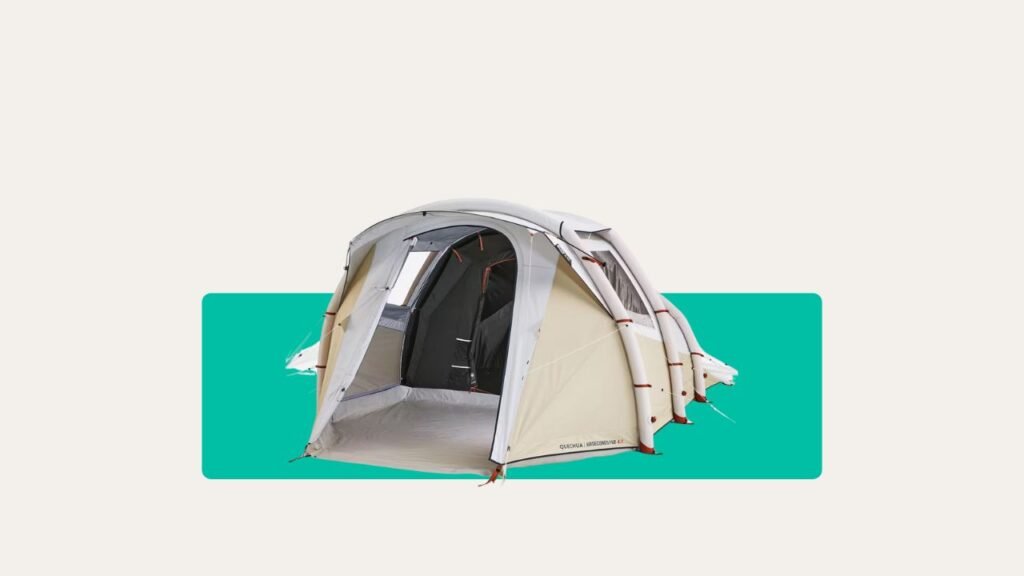
All seams are taped and zips have covers – I’ve camped through a sideways rainstorm in Snowdonia without a drop getting inside. The frame flexes in the wind but doesn’t collapse, thanks to the inflatable tubes. There’s a bit less flapping noise, too. Sun? F&B fabric reflects a good chunk of heat, so it never becomes a sauna.
Only minor complaint: the groundsheet is stitched in, with the door area on big models sometimes letting wind through underneath during storms. Peg it well.
Storage and Practical Touches
Quechua tents offer plenty of internal pockets, but some models miss the mark for serious gear junkies. You get pockets at head height and corners, enough for keys, torches, and the odd book.
The central living space has room for a camp table and even a dog bed, but don’t expect walk-in wardrobe levels of storage. Hanging loops on the ceiling are a win for lanterns.
Doors are big, with double zippers and mesh. Leave the main zip open but keep the mesh closed to stop midges making themselves at home.
Durability and Build Quality
I’ve dragged a Quechua air tent through everything from sodden fields to rocky pitches. The polyester fabric is tough, not the thin see-through stuff you sometimes see. The polycotton versions take it up a notch, being even tougher and quieter in wind.
Stitching is solid, zippers are chunky, and air beams hold pressure for days. I check mine every morning and only need a small pump-up every few days in a cold snap.
Even after half a dozen ‘proper’ trips, it still looks as good as new. Just don’t forget to dry it fully before storage – mildew is every camper’s nemesis.
Value and Price Point
Quechua inflatable tents are neither bargain-basement nor silly expensive. The feature set – fast setup, blackout tech, great weatherproofing – competes with brands twice the price.
The main cost caveat? The air pump is extra. Annoying, but once you’ve bought it, it’ll last years. Factor the pump in when comparing to ‘complete package’ tents.
Compared to faffing with poles for the same cash, I’d happily pay a sixty quid premium never to argue with my other half whilst getting drenched on setup.
Pros and Cons
Who Should Buy This Tent?
These Quechua air tents are ideal for family campers, groups of mates, or festival goers who want speed and comfort. If you’re the sort who spends hours tweaking guy lines or camps solo on mountain ridges, look elsewhere.
For the average UK camper facing unpredictable weather and wanting to get the kettle on quickly, it’s spot on. Beginner campers will love the lack of faff.
Common Questions
Q: Do I really need the branded pump?
No, but use a high-pressure pump with a gauge. 7 PSI is standard. Some cheap pumps can’t cope.
Q: Are these tents waterproof?
Yes, to typical British summer standards. I’ve sat out multi-day rain with no leaks.
Q: Will the blackout rooms make it freezing?
No. They regulate both light and heat, but in autumn, bring a good sleeping bag.
Q: How heavy is the tent?
The 8-person model is about 29 kg – alright for car camping but don’t walk far.
Q: Can I set it up solo?
Absolutely, with practice. Just don’t let it ride off in a gale as you grab the pump.
Final Verdict
I’ve camped in all weathers from Dartmoor gales to Lakes drizzle, and these Quechua inflatable tents are some of the easiest, most reliable bits of kit I’ve used. They pitch fast, sleep dark, and pack up without swearing.
If you want camping to be more about the outdoors and less about wrestling canvas and poles, this is a great shout. Not flawless – but for UK families, couples and “level up” campers, they’re genuinely worth it.
You may find cheaper, and you’ll find fancier, but for ticking most boxes with minimal hassle, the Quechua air tent lands right in the sweet spot.
Thinking of a model? Check the latest Quechua air tent pricing and specs – and treat yourself to that lie-in. Your back (and tent neighbours) will thank you.