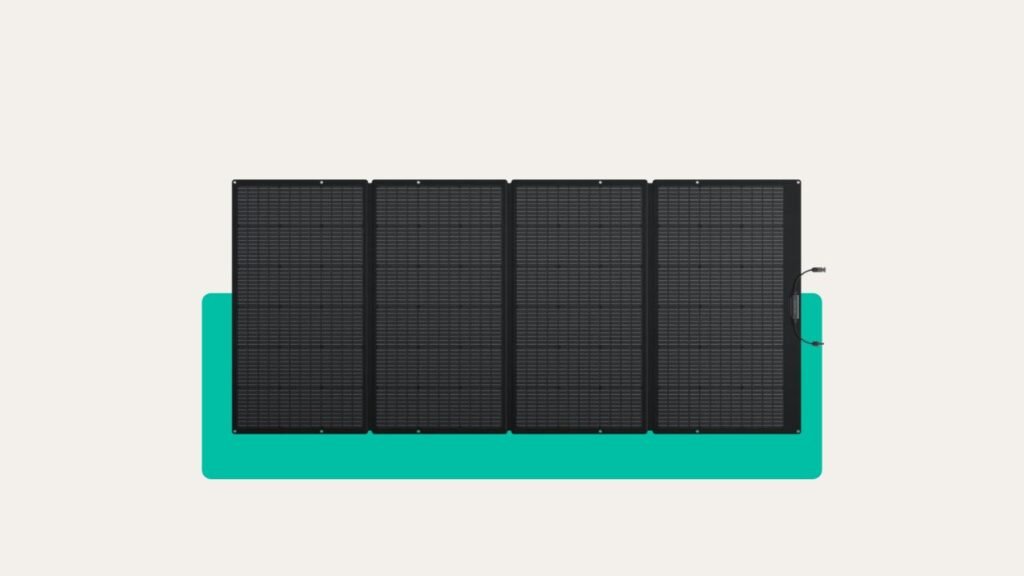
Perhaps you have also believed that you need a full rooftop setup to get real off-grid juice. Not true. The EcoFlow 400W solar panel packs enough punch to keep your power station topped up, even when the weather’s doing its usual British thing.
If you’ve ever watched your fridge flicker off mid-trip or played power roulette with a dying phone, you’ll get why this matters. This guide cuts through the fluff and gets into real-world use: how well it performs, what setup tricks help, and whether it’s worth lugging along to your next pitch.
EcoFlow 400W Panel – What’s Actually in the Box?
When my EcoFlow 400W solar panel arrived, I nearly did my back in hauling it through the door. Inside, things are simple but complete: you get the folding 400W solar panel itself, a tough carry bag that doubles as a kickstand, a chunky MC4 to XT60 cable (3.5 metres, not some fiddly thing), and a handful of carabiners for anchoring.
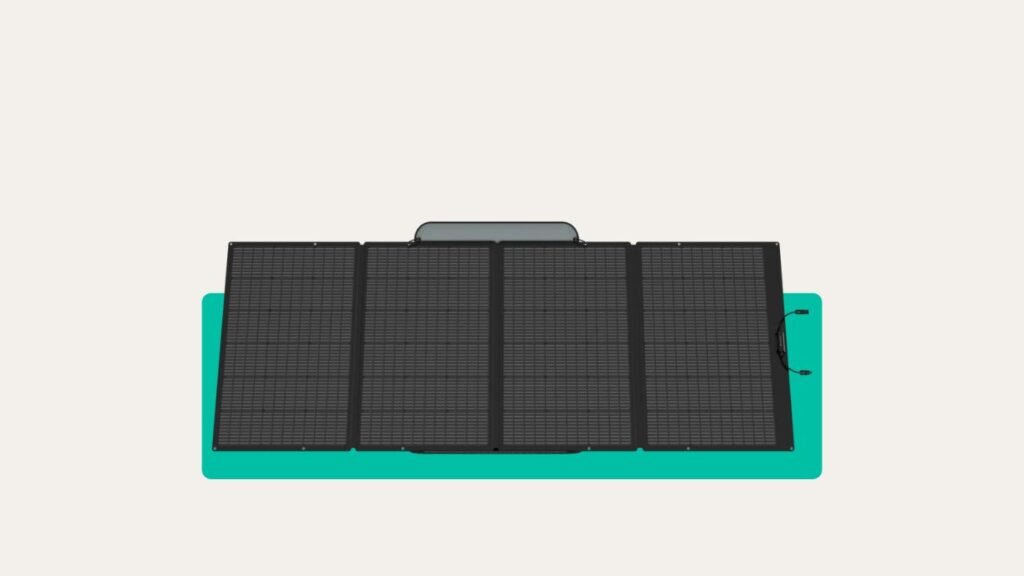
There’s an instruction leaflet, but you’ll probably only read that if you’re desperate. No extra ports for direct USB charging – this is pure panel, aimed at filling your power station, not your phone. If you use another brand’s battery box or power station, make sure the connectors match. If not, you’ll need an adapter.
Build, Features, and Why They Matter in the Field
Specs on paper rarely survive a real UK campsite. Luckily, this isn’t just “spec-sheet” good; it’s proper kit. The EcoFlow panel uses high-efficiency monocrystalline cells – about 22.6%, which basically means you’ll get more juice for the surface area, especially valuable on gloomy British mornings when you never see full sun.
If you camp where it blows a hoolie or rains sideways, the IP68 waterproof rating gives real peace of mind. I’ve had panels in the past that fizzed out after one Scottish summer. This one shrugs off rain and isn’t fazed by sand, dust, or even an accidental puddle dip. The rigid version can deal with serious wind and snow, but most van-lifers and tent-dwellers will want the foldable type for portability.
The folding design is clever. It’s four big panels that collapse into one heavy (16kg-19kg with the bag) slab about the size of a hefty suitcase. That’s not light, but it’s manageable – just don’t expect your nan to shift it up a muddy bank.
How Much Power You Really Get
Anyone who’s tried “solar” in November knows the myth: 400W on the box rarely means 400W in your field. But on a clear summer day, properly angled, this panel will get startlingly close – 350-400W is not a sales pitch, it’s possible.
When I first tried this on the Northumberland coast, I watched my EcoFlow Delta 2 power station roar up from half to full in under three hours. Laptops, lights, phone banks, even a small fridge – easy.
On overcast days, the big capacity pays off. Where smaller panels make you weep with 20W, I still saw 80-120W regularly, enough for essentials. No more rationing batteries between kettles and lights. For winter camps, that’s a game changer – less sun, but a bigger scoop with every break in the clouds.
One hard lesson: Don’t trust the angle you set in the morning. If the sun shifts, your power can halve. A little effort to tweak direction midday really pays off, especially when you’re trying to chill beers for later.
Setting Up & Lugging It
Let’s be blunt: calling this panel “ultra-portable” is a stretch. Yes, it folds. Yes, the carry bag has straps (shoulder and hand). But at 16kg-plus, on undulating ground or after a mile walk from the car, you’ll feel it.
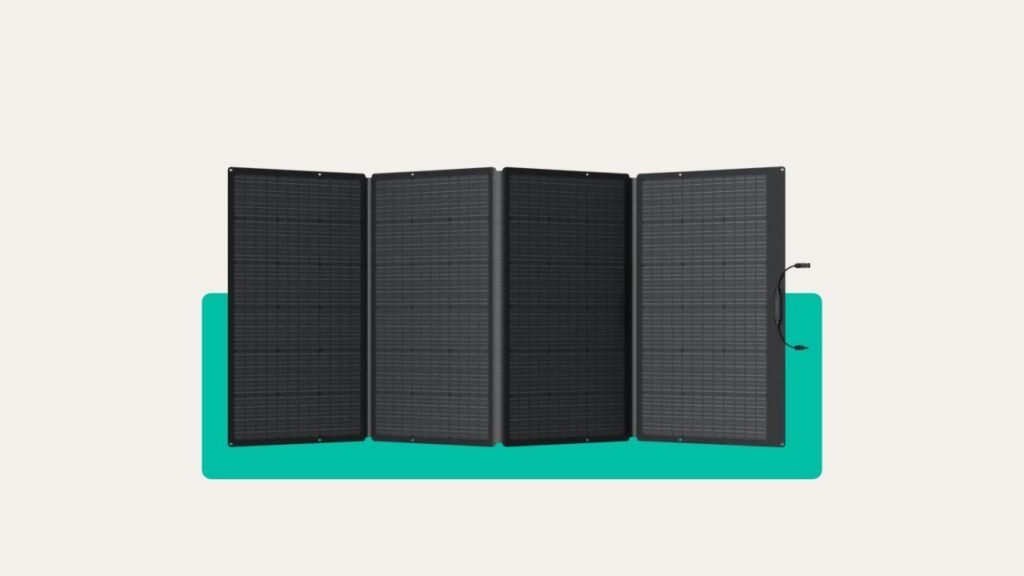
Setting up solo is possible, but – like putting up a big tent in the wind – you might wish you’d brought a mate. Unfolding is simple, but the big footprint (over 2.3m long laid out) can be awkward if you’re short on space or on soft ground. The included case acts as a kickstand, and you attach via carabiners, but I found that wind can still get under the panel ends, making it flop about. Anchor those corners down with a heavy boot or lump of gear if it’s gusty.
That 3.5m cable gives some flexibility, but if your power box needs to be dry or in the shade, think carefully about placement.
Compatibility & Realistic Connections: What Plugs In?
Out of the box, the EcoFlow 400W panel uses standard MC4 connectors, plus an MC4-to-XT60 to suit EcoFlow power stations (like the EcoFlow Delta 2 or River models). If you run a Jackery, Bluetti, or another portable station, check their solar input and buy a matching cable if you need to.
What you don’t get is direct USB charging on the panel itself. All your charging goes through your power station – no daisy-chaining accessories on the fly. For some, that’s a miss, especially if you want to run a laptop without lugging your whole battery out.
If you’re the type who mixes and matches kit or builds your own setups, you’ll appreciate the open compatibility. For basics, the “plug and play” with EcoFlow boxes makes life painless.
Tips to Keep Your Kit Dry & Your Power High
Camping in Britain means expecting sudden storms, sideways rain, or the dreaded horizontal drizzle that ruins everything. The panel itself will shrug off any amount of wet, but the electronics and ports on your power station need cover. I keep a dry bag handy – one lesson learned after watching my battery stop mid-charge as a sea fret rolled in.
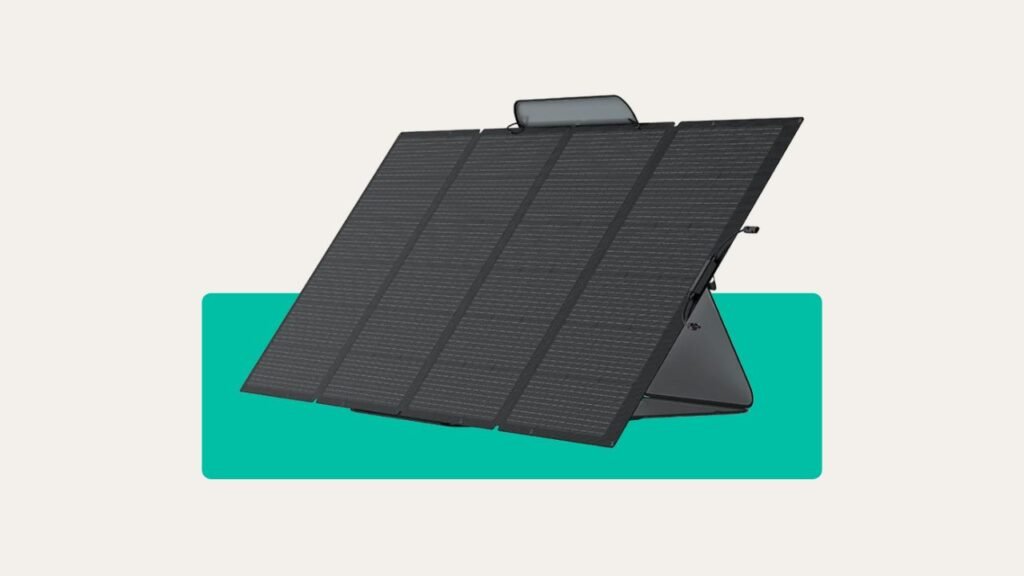
Another tip: don’t just prop the panel up and wander off. If the wind picks up, the whole lot can skitter across the field. Use the carry case as a kickstand, but always lash the corners to tent pegs or wedge them behind something solid.
On gloomy days, it’s tempting just to point the panel south and sit back. Don’t. Shifting it by 20 degrees as the sun moves can mean an extra hour’s charging by nightfall. Even popping it up on a log or using the side of your car to reflect extra light can help wring out another handful of watts. In winter, every trick makes a difference.
If you want the full 400W, keep shadows off every single corner of the panel. Even a smidge of shade cuts the output in half. I’ve seen my power drop just because I left a drinks bottle sitting on the edge.
Pros and Cons for Campers
The Verdict: Should You Lug a 400W Panel to Camp?
After soggy weekends in the Lakes and sunny days in Cornwall, I’d say this: if you want top-end, reliable solar at camp or for home backup, the EcoFlow 400W solar panel is the real deal. It’s not for fine-packers or for solo hikers – it’s too heavy and big for that. But if you camp with the car, use a camper, or want a solid backup at home, it could be the only panel you ever need.
No doubt, this panel is an investment. But if you want real power, not vague promises, and reckon you can handle a bit of bulk, it’s one of the best portable solar panels in the UK today.
If you want more lightweight options or deeper tips about camping gear, check the guides on our camping gear reviews page. If you camp as we do – rain or shine – the EcoFlow 400W is proper kit that won’t let you down, so long as you treat it with the respect it deserves.
Want power you can count on, even when the weather bloke gets it wrong? This is the closest thing you’ll get to plugging your campsite into the grid.