When camping, living off noodles and baked beans might technically work. But after a day on your feet, it won’t hit the spot. Good camp food isn’t just about filling your belly. It keeps you warm, gives you energy, and boosts your mood when the weather’s turned to mush.
I’ve seen it myself. A mate of mine, soaked to the bone in the Lakes, looked ready to call it quits. One mug of hot porridge and a strong brew later, he was laughing again. Food can turn the day around.
And it’s more than fuel. Mealtimes are when you gather, share a laugh, and take a breather. Whether it’s a wild solo camp or a big family weekend, the right food makes it all feel easier.
Top Types of Camping Food
Planning food when camping gets easier if you think in categories. I always pack a mix – things that last in any weather, snacks for quick energy, fresh bits for interest, and a solid breakfast that can face a damp, misty morning.
The four food groups to plan around are:
1. Shelf-Stable Staples to Pack
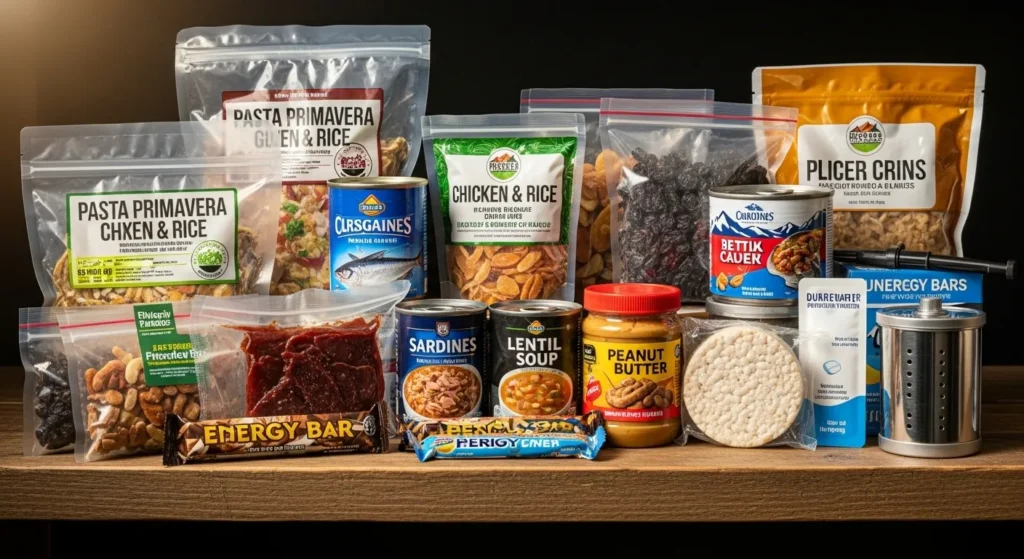
One thing I learned on a cold, wet trip across Dartmoor – your food bag takes a serious beating. Damp, heat, and bumpy trails don’t play nice. That’s why you need proper staples. Stuff that can handle the rough.
- Dried pasta or instant rice: Quick to cook and easy to portion into zip bags before you leave. Saves space. Saves fuel.
- Tinned food: Beans, chilli, curry, fish – you name it. Heavy, yes. But if you’re car camping, they’re your best mate. Always filling. Never let me down.
- Dried fruit and nuts: Great for energy dips. Raisins, apricots, mixed nuts – toss them in a bag and snack on the go.
- Crackers and oatcakes: Last longer than bread and won’t go mouldy in a damp tent. Great with spreads or cheese.
- Nut butters: Peanut butter, almond butter… whatever lifts your mood at midnight. Full of protein, too.
- Dehydrated meals: Bit pricey, but brilliant for long hikes. Just add boiling water and eat from the pouch. No mess, no dishes.
Top tip: bring more carbs and protein than you think. Cold wind and long days eat through your energy like nothing else.
2. Fresh Food That Travels Well
You don’t need a fridge to bring fresh stuff. You just need to be smart about it. I once packed soft cheese – it looked like soup by day two. Lesson learned.
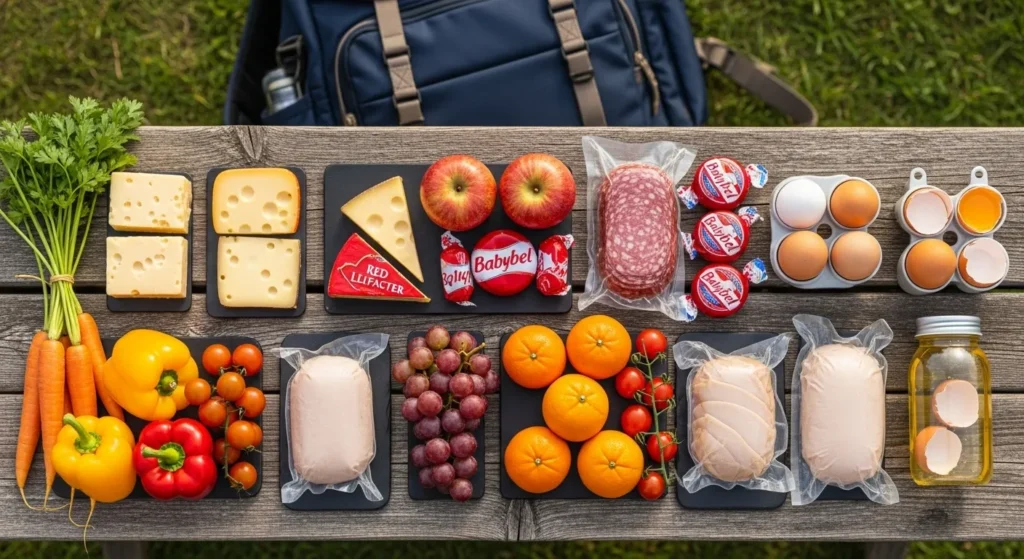
Here’s what actually lasts:
- Hard cheeses: Cheddar, Red Leicester, Babybels. They’re tough, tasty, and don’t fuss over a bit of heat.
- Fruit: Apples, grapes, and satsumas handle bumps and don’t turn to mush in your bag.
- Veg: Carrots, peppers, cherry tomatoes – no fridge needed, and they double as easy snacks.
- Vacuum-packed meats: Salami and pre-cooked chicken hold up well. Freeze them the night before to buy more time.
- Eggs: Bring a plastic egg holder, or crack a few into a bottle before you go. Scrambled eggs on day two? Yes please.
If you’re away for more than a few nights, eat the fresh stuff first. Then move onto the tins and dried gear. Keeps things simple – and safe.
3. Quick and Easy Breakfast Choices
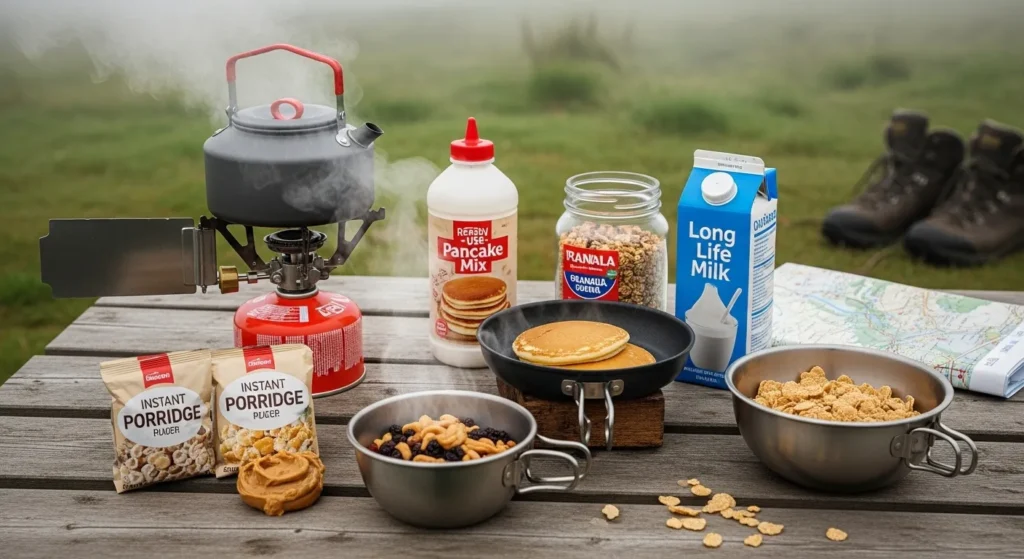
Let’s be real – no one wants to faff about with breakfast when it’s cold, your boots are damp, and there’s a hill waiting. The trick? Keep it simple. Quick fuel, hot drink, off you go.
- Instant porridge sachets: Just add boiling water. I like to throw in some dried fruit or a spoonful of peanut butter if I’m feeling fancy.
- Pancake mix: You can buy those bottles that just need water, or make your own mix at home in a flask or bottle. Pour, flip, done.
- Granola: Tasty with long-life milk, or even dry as a crunchy snack.
- Cereal: Stick with the sturdy stuff. No one wants to dig powder out of their food bag because their cornflakes crumbled.
4. Snack Ideas for Campsite Energy
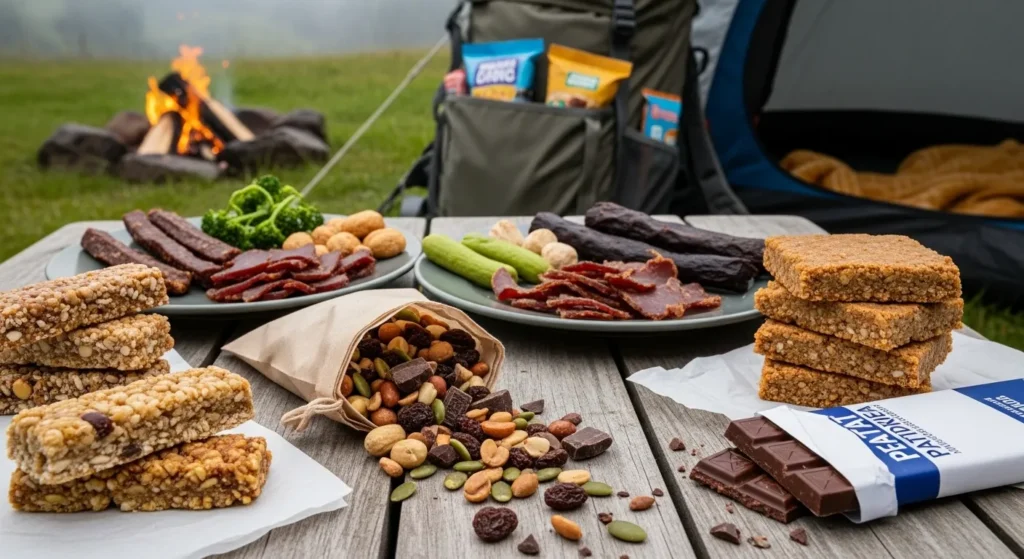
Snacks aren’t just nice – they’re survival. They keep you going between meals, fuel big hikes, and can fix a mood faster than a dry sock. Trust me, I once did the South Downs mostly on trail mix and chocolate. Not my best plan, but I made it.
Here’s what works:
- Energy bars: Go for ones with nuts and oats over sugar bombs. More staying power.
- Trail mix: Make your own—peanuts, raisins, seeds, bits of chocolate. Sweet, salty, perfect.
- Jerky, biltong, or veggie options: High-protein bites that don’t spoil. Great for climbs or long stretches between meals.
- Chocolate or flapjacks: Fireside snacks or little morale-boosters when the drizzle won’t quit.
Pack extra. In your rucksack, coat pocket, glovebox – wherever. You’ll thank yourself when that secret Mars bar saves the day.
Simple Meal Ideas for Camp
Forget Michelin stars – camp meals should be filling, fuss-free, and easy to cook on a tiny stove.
Breakfast:
- Porridge with nuts and honey
- Pancakes with syrup or Nutella
- Scrambled eggs with peppers in a tortilla wrap
Lunch:
- Cheese and salami wraps
- Tinned tuna salad (bring a squeeze of mayo; makes any veggie taste better)
- Instant soup with crackers
Dinner:
- One-pot pasta with tomato sauce, tinned chicken, and whatever veg is left
- Foil-packet potatoes and veg, cooked over coals
- Chilli from a can, with added fresh peppers
Always plan at least one meal you can eat cold. Wet stoves, out-of-gas, or fire bans catch even old hands by surprise.
Storing Food at Camp
Here’s a mistake: once left food out in Northumberland, woke up to a fox helping itself. Lesson learned.
- Pack perishables in a cool box with frozen packs. Most UK sites will refreeze your packs each day.
- Use insulated bags if you’re hiking or short on space. They’re not miracle workers, but they buy you time.
- Always use airtight tubs – keeps smells in, rain out, and any mice or foxes away.
- Store food in your car or hang it from a tree if you’re wild camping. Nothing ruins a trip like wildlife in your rations.
Special Diets and Allergies
If you’re veggie, gluten-free, or dealing with allergies, don’t leave it to chance.
- Pack clearly labelled food in separate tubs.
- Bring extra snacks – choice is limited in tiny village shops.
- Try veggie chilli or lentil curry for dinner. Use gluten-free oatcakes or rice cakes instead of bread.
If anyone’s allergic to nuts or dairy, double-check snack bars and pre-packed trail mix.
Matching Food to Trip Length
Weekend away or week-long expedition? Your food plan should match.
- Short trips (1-3 nights): Treat yourself to more fresh food, and even a bacon sarnie.
- Longer trips (4+ nights): Rely more on dried, tinned, and vacuum-sealed foods.
- Hiking or moving camps: Go for lightweight, high-calorie foods. Freeze-dried meals earn their keep here.
If you’re wild camping, pack extra – and always have a cold, ready-to-eat meal, just in case.
Quick Checklist for Packing Camp Food
A mate once forgot the matches. Don’t be that person. Here’s a last-check list:
- Pasta, rice, noodles
- Tinned meals/fish/beans
- Fresh fruit and veg for the first couple of days
- Hard cheese, cured meat, eggs
- Instant oats, pancake mix, granola
- Energy bars, trail mix, jerky, chocolate
- Salt, pepper, tea, coffee, sugar
- Oil or spread
- Long-life milk or plant drink
- Water bottle or hydration system
- Airtight containers and bags
- Cool box/cool packs or insulated bag
- Small chopping board and sharp knife
- Matches/lighter (in a dry bag)
Last tip: check the food rules of your campsite – not everywhere allows BBQs or open fires.
Camping food isn’t just about survival. It’s about putting a hot meal in your hands when the weather’s wild, and making good memories around the fire when it’s not. Make your plan, prep your food, and you’ll eat well wherever you pitch – rain or shine.