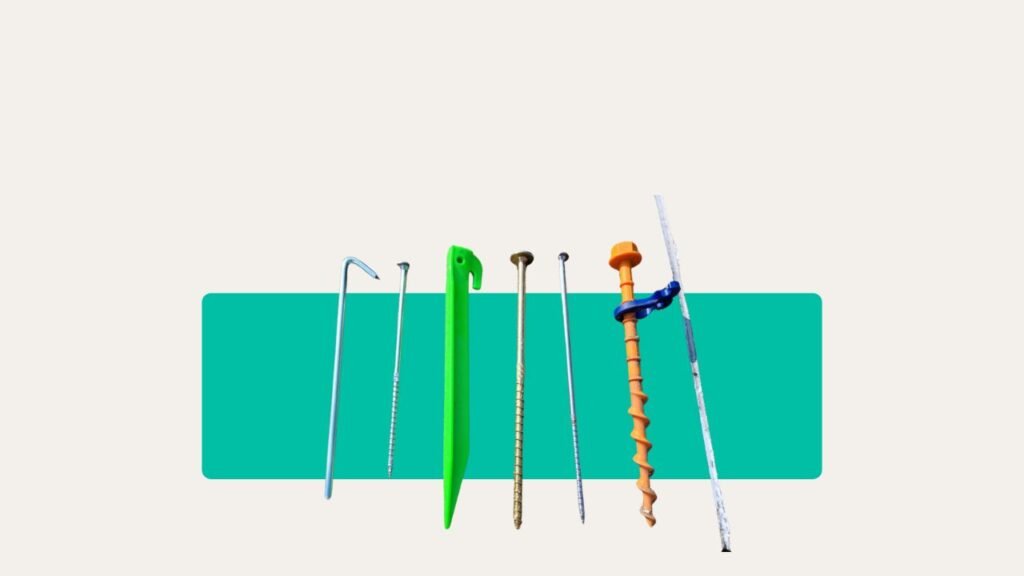
Most people think the pegs that come with a tent are ‘good enough’. Truth is, those basic wire pegs will bend faster than you can blink the minute you hit a stony field or winds pick up. Anyone who’s tried to pitch near a British beach or in the Lake District knows — there’s nothing more stressful than fighting with stubborn ground and watching your pegs U-bend in two. I learned this the hard way on a wild camp in North Wales: half my pegs twisted, the rest popped straight out in a gale. Don’t cut corners on pegs if you camp often. The right heavy duty tent pegs save you hassle, sanity, and your tent.
Main Types of Tent Pegs (and When to Use Them)
Let’s clear up some confusion. Not all pegs are built the same — and if you stick with the wrong type, you’ll pay for it in cold, wet, windy misery.
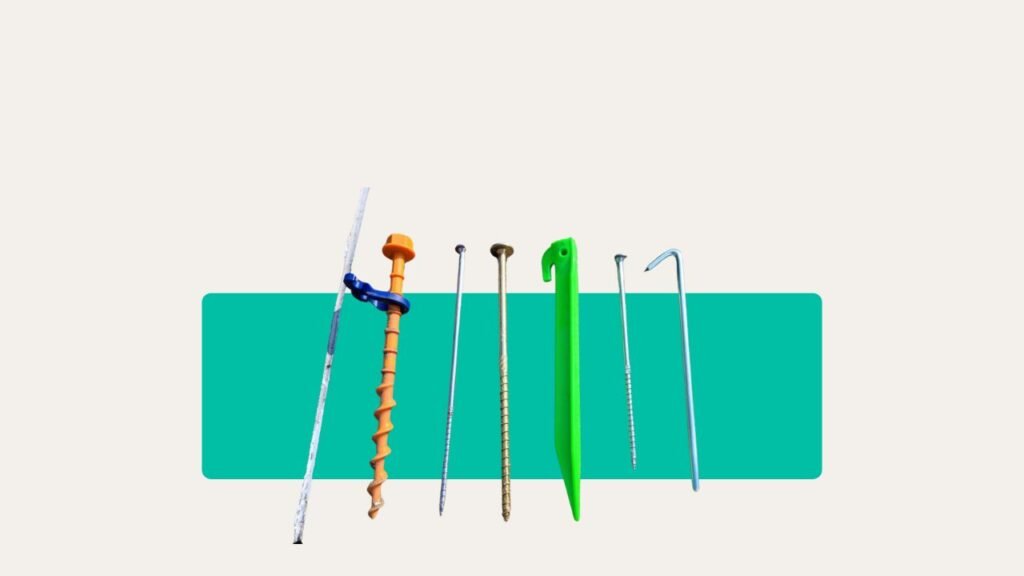
Steel Rock Pegs
The classic heavy duty pick. Thick steel, often with a T-bar or nail head. These power through hard, compacted, or stony ground with ease. They don’t bend when you whack them (with a metal mallet, not a plastic hammer — trust me).
Nail Pegs
Thin but brutal. These are usually titanium or hardened steel. Brilliant for really tough, gravelly pitches where chunky pegs just bounce off. A bit pricier, but almost indestructible.
Plastic Pegs
Big and grippy — but only useful on soft, lush ground. Leave these at home if the ground’s hard, otherwise you’ll snap them or break your knuckles trying. Great in mud, useless in stony soil.
Y-Profile and V-Profile Pegs
Aluminium or alloy, shaped for good grip with less weight. The ‘Y’ or ‘V’ shape holds better than simple round pegs, but can struggle against really stubborn stone. Still, a solid all-rounder — I always pack a few.
Best Heavy Duty Tent Pegs in the UK: Top Options
When camping on British hard ground, these are the pegs that crop up again and again from seasoned campers:
- Steel T-Bar Rock Pegs: The workhorse for rocky or compacted sites, used by pros and beginners alike.
- Titanium Nail Pegs (e.g. Titan, Tornado, MSR Core Pegs): Lightweight, tough as nails, perfect for hikers and anyone who values weight saving without losing strength.
- Alloy Y or V Pegs: Good holding power, less bulk, and lighter for backpackers — the MSR Groundhog is a favourite worldwide.
- Eurmax Galvanised Stakes: A safe, affordable staple for general use. Versatile enough for most UK conditions, except pure rock.
I’ve broken more pegs than I care to count over the years. The three above always make it home in one piece.
Why These Picks Work: Detailed Reviews
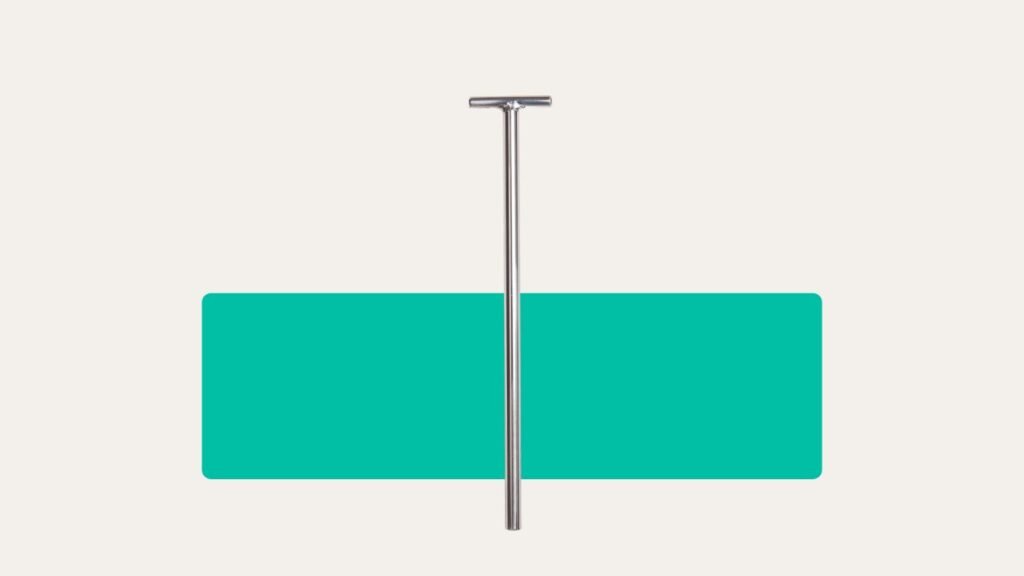
1. Steel T-Bar Rock Pegs
If you only buy one type of heavy duty tent peg for UK ground, make it a steel T-bar rock peg. These slide through hard soil, take a beating from a metal hammer, and come out looking like new. Forget the plastic-topped ones — those are weak links.
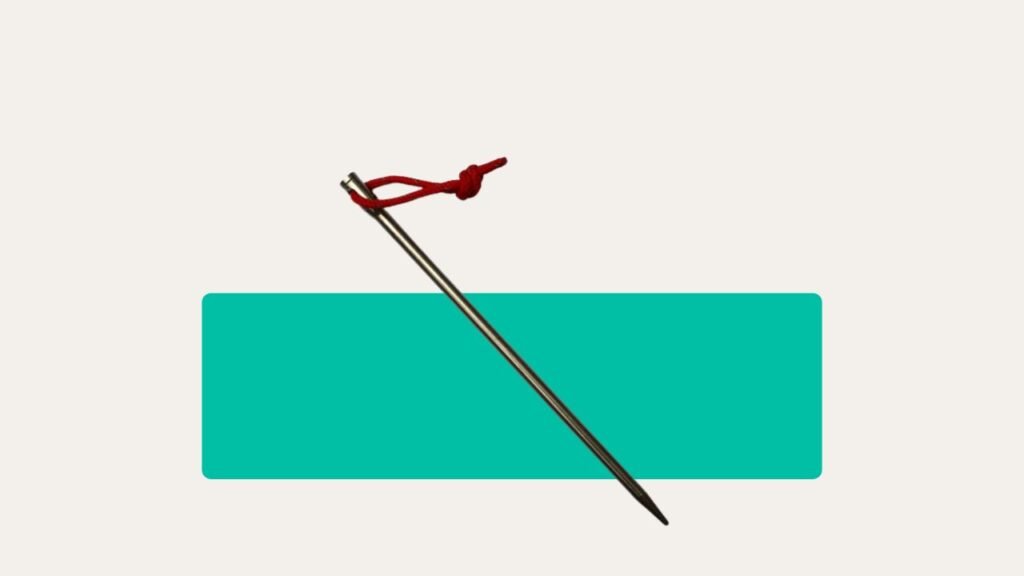
2. Titanium Nail Pegs
Titanium pegs make sense for backpackers or wild campers. Light enough not to notice, strong enough to laugh at rocks. They cost more up front, but you won’t need to replace them.
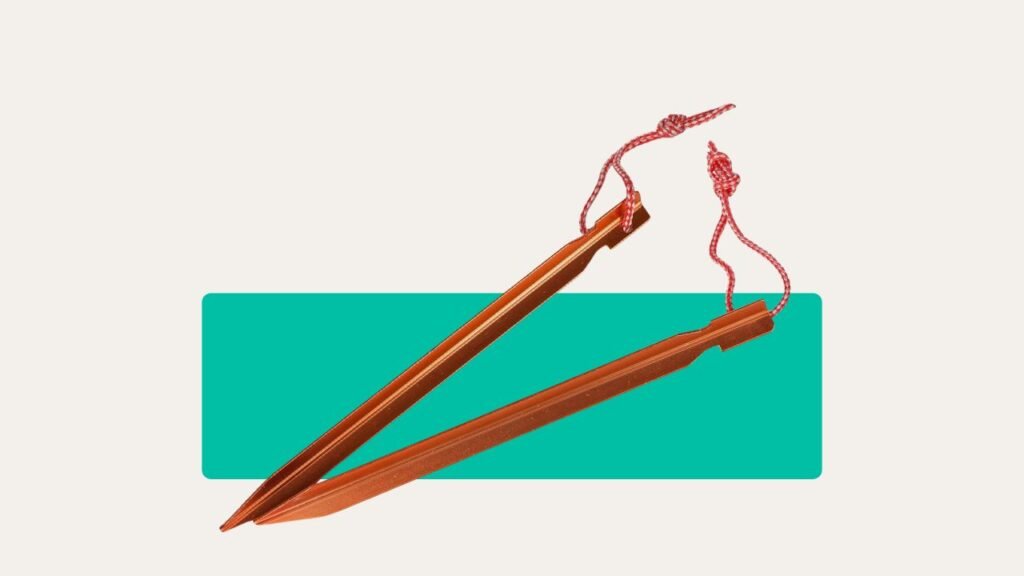
3. Alloy Y/V Pegs
Great across many camp spots — decent strength, lightweight, and the Y-profile means less chance of twisting or pulling out in heavy wind. They’re versatile, but not miracle workers on solid stone.
4. Specialist Screw or Spiral Pegs
Spiral or screw pegs (like the HI-Gear screw tent peg) bite into gravel or loose hardpack. Some people like them for extra grip, especially near beaches or hard gravel laybys, but you’ll need a cordless drill — not always practical for wild camping.
Where to Buy the Best Tent Pegs (and What You’ll Spend)
You don’t have to spend a fortune — but buy right and buy once. Look for:
- Tent pegs from Argos — Good value, decent choices for steel pegs and packs for family tents.
- Specialist outdoor shops — GO Outdoors, Cotswold Outdoor, Ultralight Outdoor Gear.
- Online — Amazon, Outdoor GB, Ellis Brigham.
Steel and aluminium Y pegs: £1–3 each.
Titanium nail pegs: £4–5 each, sometimes sold individually (so you can slowly build your ultimate set).
Cheap packs (with plastic tops, or unbranded pegs): tempting, but they’ll fail you when you need them most.
Tips for Pegging on Tough Ground
- Always use a steel or alloy mallet, not plastic. Plastic just bounces and breaks.
- For really stubborn ground, try crossing two pegs at the same point (an X shape) for double strength.
- Get your foot involved if the mallet's not making a dent — but watch those toes!
- Mix your pegs: a few tough nails for rock, some Y or V pegs for corners and less-stressed guys.
- Never force a peg into solid stone. Angle it slightly and wiggle as you go in.
- If it just won’t bite, move and retry — no shame in changing your plan.
Personal lesson? Once spent more than an hour trying to bash wire pegs into a hard Brecon hillside. Ended up sleeping in a tent that looked like it’d been tackled by a Welsh rugby team.
Expert and User Insights: Why Mixing Pegs Matters
Most proper campers I know carry a mismatched handful of pegs — and that turns out to be the best way. Here's a quote from a mate who camps every other weekend:
“I thought those plastic pegs looked sturdy. Two snapped trying to peg out on Dartmoor. Ever since, I mix a few titanium nails with heavy steel ones, and never had a tent blow away since.”
It’s not about buying the poshest pegs — it’s about having the right spread for whatever the British ground throws at you.
Building Your Tent Peg Arsenal: What You Actually Need
Don’t just buy a cheap 20-pack and hope for the best. Think about the ground you’re usually on:
Backpackers/Wild Campers: 4 titanium nails for corners, 4 Y/V pegs for mid-points, a handful of cheapies as backups.
Family or Festival Campers: 8–12 steel T-bar pegs for main guys and stress points, a pack of Y/V pegs for the rest.
Everyday Weekend Campers: 6–8 mixed steel and alloy Y pegs, 2–4 nail pegs, a few plastics for soft ground if needed.
Skip those thin wire pegs unless you’re desperate. Upgrade to strong metal as you go. You don’t need a matching set — just reliable, proven performers.
Pro tip: Always keep 2–3 emergency spares and a marker, in case a peg disappears into the grass. And when funds are tight, slowly replace the weakest ones first. There’s no need to throw away your old set, just build smarter.
Conclusion: Decent Pegs, Decent Night’s Sleep
Investing a little in the best tent pegs for hard ground makes UK camping so much easier. You won’t spend an hour cursing twisted metal on a pebbly pitch, and when the wind picks up, you’ll sleep through without issue. Don’t let your adventure be ruined by a cheap, faulty peg.
Do your future self a favour: mix up a set built for British ground, always bring a steel mallet, and watch your camp go up (and stay up) — no matter what’s underfoot.