Here’s the thing with most portable power stations – they’re basically fancy batteries. Handy, sure, but once they run out of juice, you’re stuck unless you’ve got a way to recharge them. That’s fine for a quick overnight trip, but not so great when you’re planning a full weekend off the grid.
I’ve been there. Fridge humming along nicely, phone charged, coffee made… and then boom – battery flat before you even get to dinner. Not ideal when the nearest socket is two hills away.
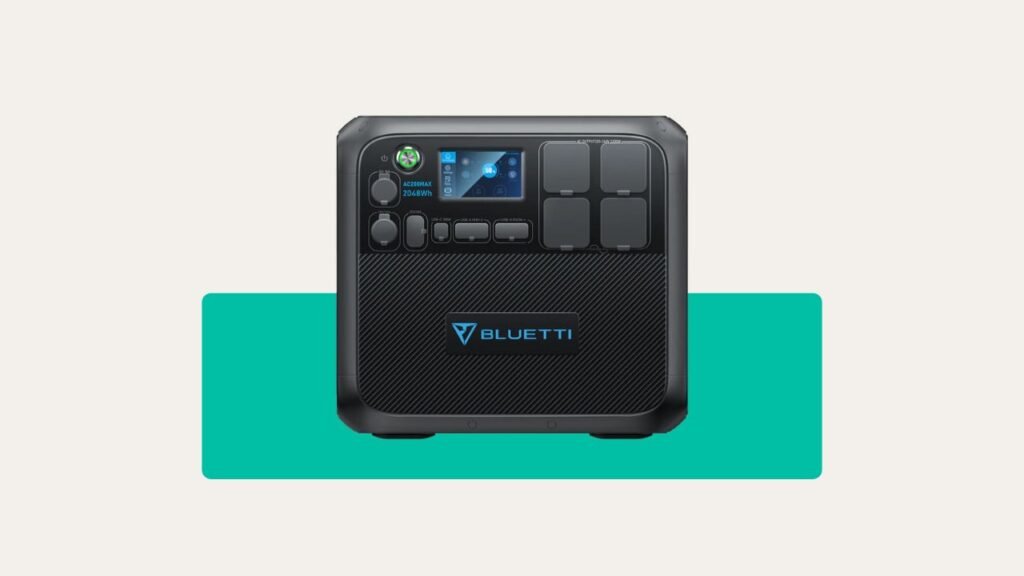
That’s why I was keen to properly test the Bluetti AC200Max. With a chunky 2048Wh capacity, this beast promises real staying power. Enough to keep your essentials running through long weekends and even longer adventures without constantly watching the battery gauge.
I’ve put it through its paces over several weeks, using it with everything from camping gear to small household appliances. Here’s how it actually performs when you’re off-grid and relying on it to keep your trip running smoothly.
Why Pick the Bluetti AC200Max?
Let’s be honest: this isn’t your average power station. It’s big, it’s bold, and it’s built for serious use. So, do you really need something this hefty? Well… maybe not for a quick overnight trip. But if you're planning to be off-grid for a while, this thing starts to make a lot of sense.
If you’re camping with family, living the van life, or just want a reliable backup at home for when the power cuts out, the AC200Max steps up where smaller kits simply don’t. It’ll run your fridge, power your gadgets, brew your morning coffee – even when the weather’s doing its worst outside.
For me, it’s about peace of mind. No more juggling devices or rationing what I can charge. No more waking up to warm milk and dead phones. The AC200Max keeps things running when it matters most, and that’s exactly why it earns its place on my packing list.
Bluetti AC200Max – Quick Specs and Key Features
| Feature | Details |
| Battery Capacity | 2048Wh LiFePO4 (3500+ cycles to 80%) |
| Inverter Output | 2200W continuous / 4800W surge (pure sine wave) |
| Weight | 28.1 kg – not backpack-friendly, but fine for basecamp or van |
| Size | 42 x 28 x 38.7 cm |
| AC Outlets | 4 x 220–240V UK sockets |
| DC & USB Ports | 1 x 30A RV plug, 2 x USB-A, 2 x USB-A quick charge, 1 x 100W USB-C, 2 x 12V DC |
| Wireless Charging | 2 x 15W pads on top – handy for phones |
| Touchscreen & App | Yes – easy monitoring and control, even in the dark |
| Charging Methods | AC (500W), Solar (up to 900W), Dual (AC + solar = 1300W), Car charging |
| Expandability | Add 2 x B230 (6144Wh) or 2 x B300 (8192Wh) batteries |
What Comes with the Bluetti AC200Max?
If you’ve ever opened a new gadget box only to find you’re missing a key cable, you’ll appreciate this bit. Here’s what’s inside when you order the Bluetti AC200Max:
- The AC200Max unit itself. Big, blue, and built like a tank.
- 400W mains charger (with external “brick”—more on that later).
- Aviation to XT-90 cable (for solar or car input).
- XT-90 to MC4 cable (handy for standard solar panels).
- XT-90 to car cigarette lighter adapter.
- User manual and warranty documents.
No faffing about looking for random adapters. You’ll have most things you need to get started. Just add solar panels or extra batteries if you need the extra juice.
The Tech Inside: Battery and Inverter Breakdown
Let’s keep this simple. The Bluetti AC200Max runs on LiFePO4 batteries – that’s lithium iron phosphate, if you want to sound smart around the campfire. What matters more than the name is what it does.
This type of battery is safer, tougher, and lasts way longer than the kind you’ll find in cheaper power stations. We’re talking over 3,500 full charge cycles before it even starts to show signs of wear. If you use it every day, it’ll still give you years of solid performance without falling flat.
But here’s the real win: it doesn’t overheat or get fussy. I’ve used stations in hot vans where the battery felt hotter than the kettle, but not with this one. It stays cool and reliable, even after a long charge in less-than-ideal conditions.
The AC200Max also comes with a 2,200W pure sine wave inverter (and a surge capacity of 4,800W), which just means it can run your sensitive gear without risk – laptops, CPAP machines, camera batteries, even musical equipment. I’ve powered a guitar amp with this thing, and it was smooth as anything. No buzz, no drama. Just plug in and play.
Size and Key Features of the Bluetti AC200Max
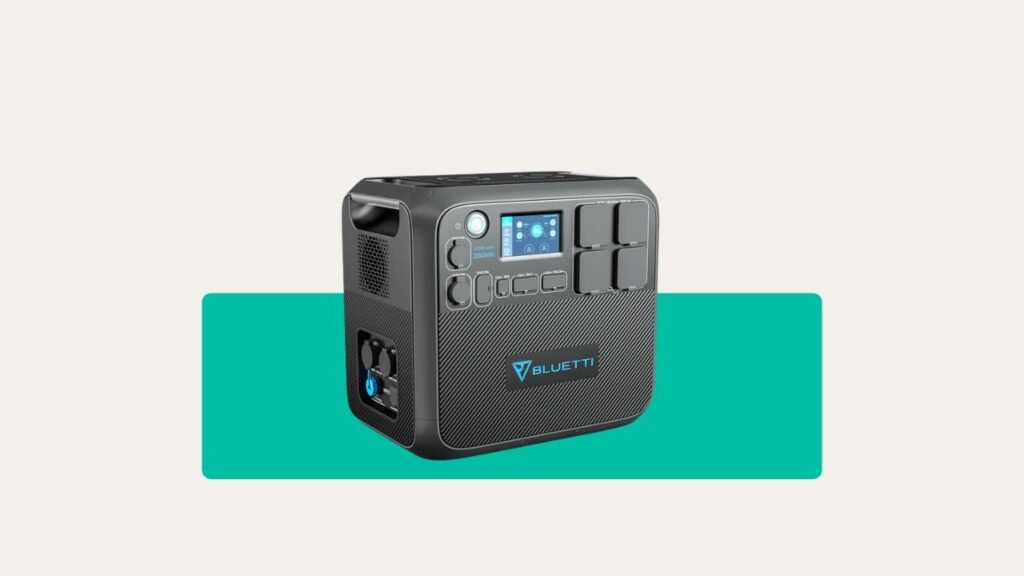
Let’s not sugar-coat it – the Bluetti AC200Max isn’t small. It’s about 42 x 28 x 38.7cm and weighs just over 28kg. If you’re picturing slinging it in your rucksack, forget it. But as a basecamp, van, or family tent unit, this is spot on.
A few practical features stand out:
- Four AC outlets (three-pin, proper UK sockets).
- One 30A RV plug for bigger gear.
- Wireless charging pads on top for your phone (ideal if cables always disappear into the mud).
- Touchscreen controls and a proper mobile app. You don’t need to crawl around with a torch to read the screen.
- Two rugged integrated carry handles make lumping it about possible, but not fun.
Power Output and Device Support
This is where it earns its stripes. I’ve seen campers bring hairdryers or kettles to a site, only to fry the fuse and knock everyone’s power out. You won’t do that here; the inverter is frankly a monster.
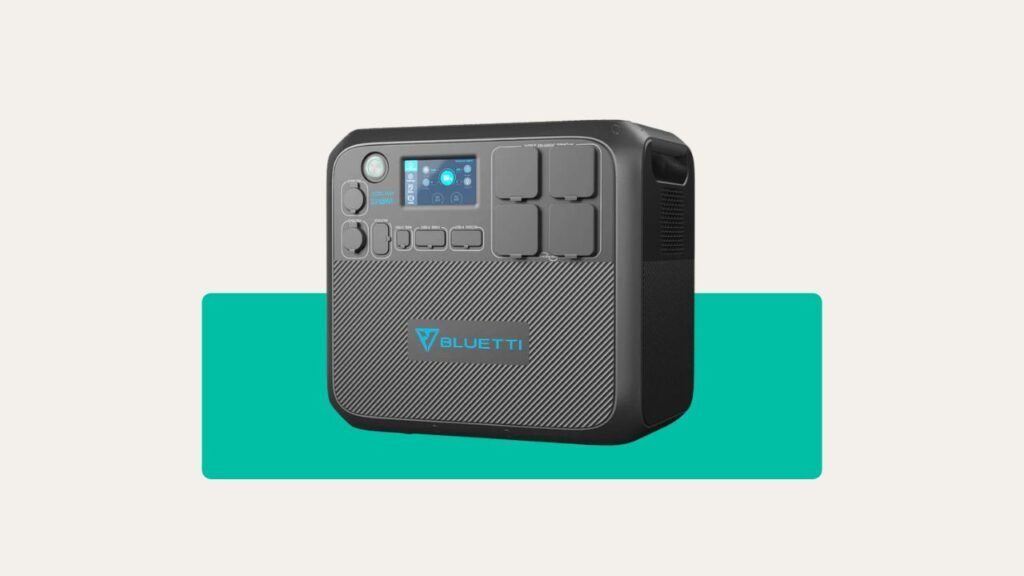
You get:
- Four 220-240V AC sockets (run a fridge and the kettle, no easy feat).
- 100W USB-C port for fast charging laptops.
- Two basic USB-A ports and two quick-charge slots for your phone, headtorch, or tablet.
- 12V DC outlets for car fridges or air pumps.
A 2,200W continuous output and 4,800W surge means you can start power-hungry kit like an induction hob, microwave, or even a dirty big fan heater for a bit – handy on icy spring nights in the Lakes.
Charging Options and Solar Capability
I’ve had weekends scuppered by kit that took all day to charge, only to run flat after tea. The AC200Max lets you charge in a few ways:
- 500W AC mains (takes 5-6 hours, a bit slow for my liking).
- Up to 900W solar input – plenty if you’re at a sunny field or festival.
- You can even double up – solar and mains at once – for up to 1,300W charging. I’ve done a dawn-to-full-top-up in under two hours with the right panels and a clear sky.
- Car charging is an option (if you’re on a long drive), but slow.
Big tip: if you want quick turnarounds, invest in a decent solar setup. Standard mains charging is slower than EcoFlow or Jackery rivals. Pack patience or plan to charge overnight.
Expandability and Modularity
Most folks don’t need 8,000Wh every trip. But if you do, maybe you’re running a camper fridge, lights, and laptops for a week, the AC200Max can fit the bill. You can add up to two B230 batteries (for 6,144Wh total) or two B300 batteries (for a massive 8,192Wh). Expansion is plug-and-play, controlled by that same app.
I once stayed on a windswept Cornish headland, no hook-up. The extra battery pack kept the fridge running and phones charged all weekend, even after a sunny day was followed by a cloudier one. Modularity means you’re not lugging more than you need.
Top Pros for Campers and Travellers
Let’s break down why this might be your new best mate on the road:
- Outlasts most rivals in battery lifespan – LiFePO4 is hard to beat.
- Serious power output for proper appliances – forget rationing tea breaks.
- Loads of output ports, including wireless charging.
- Expandable if your needs ramp up – it literally grows with your trips.
- Reliable app and touchscreen save you from fumbling in the dark or rain.
- Safe, with built-in protections so you don’t fry your gadgets.
Watch Outs – Weight, Size, and Price
Now for the trade-offs. It’s heavy – 28kg is not something you casually shift about after a long hike. The external power brick for charging can sometimes be annoying and make its own noise. Mains charging is slower than others in this price bracket. It’s a big financial outlay as it costs as much as a good tent or two. Only go for this if you genuinely need sustained, off-grid power.
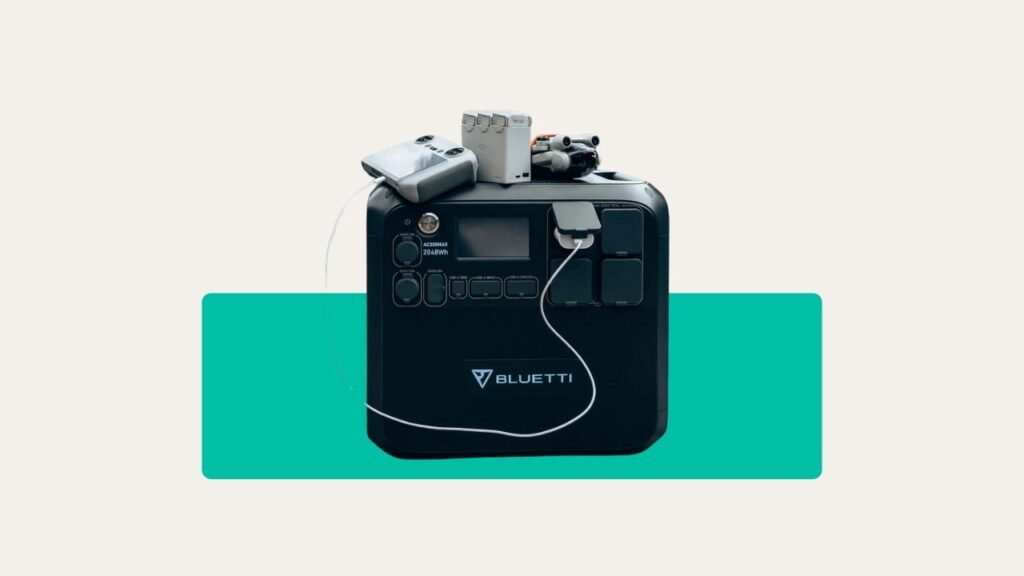
If you camp light, stick to smaller units (like the Bluetti EB70 or Jackery Explorer 1000). If you’re mostly on campsites with hookups, the AC200Max is overkill.
Bluetti AC200Max Versus the Competition
Against the Jackery 2000 Pro, the Bluetti wins on expandability and battery lifespan. Jackery’s faster, but can’t grow or last as long. EcoFlow’s Delta Max charges much quicker but is noisier and has fewer UK sockets.
If build quality and battery cycle life matter, Bluetti has a clear edge. If you want the lightest or fastest-charging unit, look at the Jackery or EcoFlow ranges. Each has pros and cons. So, think about how you actually camp, not what the specs sheet says.
Final Verdict: Is the Bluetti AC200Max Worth It?
If you’re after reliable, no-fuss power that can handle real-life camping chaos, the Bluetti AC200Max is hard to beat. It’s not made for the casual camper or the pack-light hiker, but if you go off-grid often, travel in a van, or just want solid backup when the lights go out, this thing earns its keep.
Sure, it’s heavy. It’s not cheap. And lugging it around isn’t anyone’s idea of fun. But in return, you get peace of mind. I’ve used it to save soggy trips, power hot meals during storms, and keep the whole family online (and happy) when the weather turned nasty. That kind of reliability is worth every penny.
Still on the fence? Ask yourself what you really don’t want to go without when you’re miles from a socket. For me, it’s a warm cuppa, chilled milk, and enough charge to check the weather – or call for help if things go sideways. The AC200Max delivers all that and more, rain or shine.